Your Trusted Partner for Extruded & Laminated Packaging Tubes | Est. 2004
Leave Your Message
EMILY Cosmetic Tube Packaging Launches Production-Friendly Tube Solution

China Top 10 Tube Container Manufacturers 2026

China Top 10 Tube Container Manufacturers 2026 examines the companies shaping modern Tube Containers production. The market is moving beyond basic appearance. Buyers now inspect material safety, barrier performance, closure accuracy, print quality, and delivery consistency. A tube may look simple, yet every millimeter matters. A weak shoulder can cause leakage. An uneven cap can damage customer confidence.

Packaging engineer and industry consultant Michael J. Bennett states, “A reliable tube protects the product before it promotes the brand.” This principle guides our review. We consider aluminum, plastic, and laminated Tube Containers, including their suitability for cosmetics, pharmaceuticals, personal care, food, and industrial applications. Manufacturing capacity matters. So do clean production areas, quality-control systems, tooling expertise, and transparent communication.

The companies listed here are assessed through practical industry criteria rather than popularity alone. We examine forming technology, decoration methods, sealing performance, minimum order quantities, customization options, and export experience. Certifications and documented testing also deserve attention. They are not perfect proof.

Some manufacturers may present impressive factories but provide limited technical evidence. Others may offer excellent pricing but weaker consistency during large orders. That difference is important. A lower quotation is not always a lower total cost.

This guide offers a useful starting point for buyers planning 2026 sourcing decisions. Readers should still request samples, production records, compliance documents, and independent testing. Market conditions can change quickly. Rankings can change too. That is the uncomfortable truth.
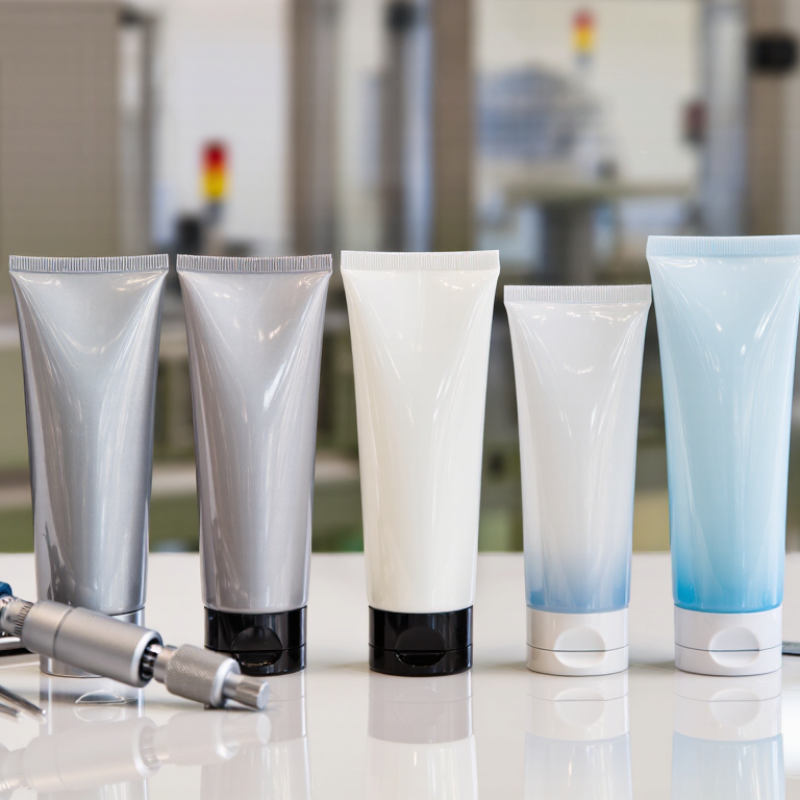
China Top 10 Tube Container Manufacturers 2026

What Tube Containers Are and Where They Are Used

Tube containers are hollow, flexible packages designed to hold and dispense liquids, creams, gels, or pastes.

They usually have a sealed body, a shoulder, and a fitted cap or nozzle. Common materials include plastic, aluminum, and multilayer structures. Each option affects strength, barrier protection, recyclability, and product compatibility.

They appear in many daily and professional settings. Toothpaste and hand cream use tubes for controlled dispensing. Cosmetic products often need smooth shoulders and narrow openings. Pharmaceutical creams require clean sealing and accurate dosage. Food products, such as sauces or decorative icing, may use wider openings. Laboratories and industrial workshops also select tubes for adhesives, lubricants, and testing compounds.

Small details matter.

Packaging engineers check leakage, cap torque, squeeze force, and storage stability before approval. A tube that feels convenient may still collapse badly or leave too much residue. Light-sensitive formulas may need strong barrier layers. Oxygen-sensitive contents may require additional protection.

In one practical test, a tube can survive transport but fail after repeated opening. That result deserves attention, not excuses. Manufacturers should also examine seal quality, printing adhesion, and compatibility with filling equipment.

The best tube depends on the product, user habits, shelf conditions, and disposal system. There is no perfect format. A lower-cost tube may create more waste, while a premium structure may complicate recycling. Careful testing remains essential for reliable tube container production in 2026.

How China’s Tube Container Manufacturing Industry Has Developed

China’s tube container manufacturing industry has changed from a price-driven sector into a more structured production network. Earlier factories often focused on basic plastic tubes and large-volume orders. Today, leading manufacturers invest in automated extrusion, precision printing, and multi-layer barrier technology. These improvements support cosmetics, personal care, food, and household packaging applications.

The development is visible on the factory floor. Modern lines monitor tube diameter, wall thickness, sealing temperature, and print alignment in real time. Quality teams also perform drop tests, leakage checks, cap-torque measurements, and compatibility testing. Many facilities now use digital production records, which improve traceability from raw materials to finished cartons. For buyers comparing China’s top ten manufacturers in 2026, certification alone is not enough. Practical audit results matter more.

Environmental expectations are also reshaping production. Manufacturers are reducing excess material, testing recyclable structures, and improving energy use during extrusion and curing. Progress remains uneven. Some factories still depend on manual inspection, and recycled materials can create color or strength variations. That limitation deserves honest discussion. Experienced suppliers usually explain these risks before mass production and provide sample testing plans. Their technical teams can adjust shoulder design, opening size, decoration methods, and filling compatibility for different products. This hands-on cooperation has become a major sign of industry maturity.

Key Criteria for Evaluating Chinese Tube Container Manufacturers

When evaluating Chinese tube container manufacturers in 2026, start with material control. Confirm whether the tube uses aluminum, plastic, laminate, or a blended structure. Each option affects barrier performance, flexibility, recycling, and filling compatibility. Request material specifications, migration test records, and batch traceability. Do not rely on attractive samples alone.

Production consistency matters more than a polished showroom. Review wall-thickness tolerance, cap fit, shoulder alignment, print registration, and sealing strength. Ask for inspection standards and defect limits. A practical audit should examine molding lines, clean storage areas, and finished-goods cartons. Test the seal. Squeeze it repeatedly. Then inspect the opening for cracks or leakage. Small failures become expensive during filling and transport.

Supplier evaluation should also cover engineering support, minimum order quantities, tooling ownership, lead times, and corrective-action procedures. Request samples from normal production, not specially prepared pieces. Compare them with your filling equipment and storage conditions. Check whether quality documents are current and independently verifiable. Clear communication is useful, but written records matter more. A low quotation may hide tooling changes or weak inspection controls. I have seen buyers focus too heavily on unit price. That approach needs reconsideration. Environmental claims also require evidence, including recycled-content data, material declarations, and realistic disposal guidance. Reliability is built through repeated checks, not promises.

China Top 10 Tube Container Manufacturers 2026

Key Criteria for Evaluating Chinese Tube Container Manufacturers

This evaluation framework uses practical procurement priorities for tube containers, including product quality, material compliance, manufacturing capacity, customization, quality assurance, and delivery performance. Relevant verification may include ISO 9001, ISO 15378, ISO 11607, GMP requirements, packaging safety testing, and documented quality-control procedures. The percentages represent recommended evaluation weights rather than the performance of any specific company or brand.

China’s Top 10 Tube Container Manufacturers in 2026

China’s Top 10 Tube Container Manufacturers in 2026 are being evaluated through more than price and production volume. Buyers now examine material traceability, forming accuracy, decoration quality, and delivery consistency. A dependable manufacturer should provide clear specifications, batch records, and practical samples before mass production begins.

Factory experience becomes visible in small details. Tube walls should remain even after filling and sealing. Caps should close smoothly without damaging threads. Printed colors must stay consistent across different production runs. The strongest suppliers usually operate modern extrusion, injection, sealing, and inspection lines. They also maintain documented quality controls for cosmetic, personal care, food, and household packaging applications.

Not every ranking is perfect. Some manufacturers show excellent samples but weaker communication after an order starts. Others offer impressive automation, yet struggle with unusual dimensions or low-volume projects. Buyers should request material certificates, leakage tests, drop tests, and a production timeline. An on-site audit can reveal storage problems that brochures never mention. Small defects matter. A slightly misaligned shoulder may affect filling speed, shelf appearance, and customer confidence. In 2026, China’s top ten tube container manufacturers will likely stand apart through reliable execution, flexible engineering, and honest responses when a trial does not go as planned.

China’s Top 10 Tube Container Manufacturers in 2026

Rank Anonymous Manufacturer ID Primary Tube Container Types Common Materials Typical Capacity Range Standard Diameter Range Customization Capability Typical Minimum Order Quality Certifications Commonly Supported Typical Export Markets Estimated Production Lead Time Overall Capability Score
1 Manufacturer A Cosmetic tubes, pharmaceutical tubes, laminated tubes PE, PCR-PE, aluminum-plastic laminate 5–250 ml 13–60 mm Offset printing, digital printing, hot stamping, special caps 10,000–30,000 units ISO 9001; GMP-oriented production controls Europe, North America, Southeast Asia 25–40 days 9.4 / 10
2 Manufacturer B Personal-care tubes, oral-care tubes, squeeze tubes PE, EVOH-barrier laminate, PCR resin 10–300 ml 16–60 mm Multi-color flexographic printing, flip-top and screw caps 20,000–50,000 units ISO 9001; ISO 14001 available for selected facilities North America, Europe, Australia, Middle East 30–45 days 9.2 / 10
3 Manufacturer C Pharmaceutical tubes, ointment tubes, medical-use packaging Aluminum, PE, barrier laminate 3–150 ml 13–50 mm Small-volume filling compatibility, tamper-evident closures 10,000–25,000 units ISO 9001; GMP production practices Europe, Asia-Pacific, Latin America 30–50 days 9.0 / 10
4 Manufacturer D Cosmetic tubes, hair-care tubes, body-care tubes PE, sugarcane-based PE, PCR-PE 15–250 ml 19–60 mm Embossing, metallic effects, matte finishes, custom molds 15,000–40,000 units ISO 9001; recyclable-material documentation Europe, North America, Southeast Asia 25–45 days 8.8 / 10
5 Manufacturer E Laminated tubes, high-barrier tubes, food and personal-care tubes ABL, PBL, PE, EVOH laminate 5–200 ml 16–55 mm High-barrier structures, custom shoulders, multi-layer printing 20,000–60,000 units ISO 9001; food-contact compliance available by market Middle East, Europe, Africa, Southeast Asia 35–55 days 8.7 / 10
6 Manufacturer F Standard squeeze tubes, skin-care tubes, sample tubes PE, PCR-PE, aluminum-plastic laminate 5–120 ml 13–50 mm Stock molds, custom artwork, standard closure selection 10,000–30,000 units ISO 9001; batch traceability systems Southeast Asia, Africa, South America 20–35 days 8.5 / 10
7 Manufacturer G Dental-care tubes, cosmetic tubes, household-care tubes PE, co-extruded PE, laminated structures 10–250 ml 16–60 mm Shoulder decoration, custom nozzles, multi-color printing 25,000–50,000 units ISO 9001; hygiene and process-control procedures North America, Europe, Asia-Pacific 30–45 days 8.4 / 10
8 Manufacturer H Travel-size tubes, promotional tubes, refillable tubes PE, PCR-PE, bio-based PE 3–100 ml 13–45 mm Small formats, short-run decoration, custom cap colors 5,000–20,000 units ISO 9001; material declarations available Asia-Pacific, Europe, North America 20–40 days 8.2 / 10
9 Manufacturer I Industrial dispensing tubes, adhesive tubes, specialty tubes PE, multilayer laminate, aluminum 10–500 ml 19–70 mm High-viscosity dispensing formats, threaded closures, barrier options 10,000–40,000 units ISO 9001; technical material documentation Europe, South America, Middle East 35–60 days 8.0 / 10
10 Manufacturer J General-purpose cosmetic tubes, cleansing tubes, lotion tubes PE, PCR-PE, aluminum-plastic laminate 10–200 ml 16–55 mm Standard decoration, cap matching, custom color development 15,000–35,000 units ISO 9001; product inspection and batch records Asia-Pacific, Africa, Latin America 25–45 days 7.8 / 10
Data note: This anonymized comparison uses commonly documented capability ranges for Chinese tube-container production. Actual specifications, certifications, minimum order quantities, pricing, and lead times should be verified directly with each supplier before purchase.

How to Choose the Right Chinese Tube Container Supplier

Choosing the right Chinese tube container supplier requires more than comparing catalog prices. Start with the container’s purpose, material, capacity, closure, and decoration method. Ask for technical drawings and physical samples. Check wall thickness, sealing quality, print adhesion, and dimensional consistency.

A reliable supplier should explain its production process clearly. Request current certifications, factory photos, inspection records, and material documentation. Verify whether testing covers migration, chemical resistance, and compatibility with your product.

For cosmetics, food-related packaging, or household products, confirm that the materials meet your destination market’s requirements. Do not rely on certificates alone. Their dates and scope matter.

Communication reveals practical experience. Can the supplier answer questions about mold fees, minimum order quantities, sampling time, and replacement procedures? A written quality agreement should define inspection standards, defect limits, packaging, and delivery terms. Request a pilot order before committing to large volume. Small tests expose large problems.

Price is only one factor.

A cheaper tube may have uneven shoulders, weak caps, or unstable color. I have seen polished presentations hide incomplete quality data. That should make buyers pause. Factory visits, independent inspections, and batch photos can improve confidence. Still, no supplier is perfect. Even strong factories may miss a detail, so keep approval samples and inspection checkpoints in the purchasing plan.