China Top Plastic Bottle Packaging Manufacturers?
Choosing among China’s top Plastic Bottle Packaging manufacturers requires more than comparing catalog photos or quoted prices. A dependable supplier must prove consistent resin quality, accurate neck finishes, secure caps, and stable production capacity. Factory experience matters, but evidence matters more.
A serious evaluation should examine material options, including PET, HDPE, and recycled-content blends. Ask for batch records, migration-test documentation, and samples from current production. Check whether the bottle survives drop testing, torque testing, and transport vibration. A clear 500-milliliter PET bottle may look simple, yet a small neck-size error can cause leakage on an automated filling line. Manufacturing details decide real performance.
As Ellen MacArthur, founder of the Ellen MacArthur Foundation, has said, “A circular economy is based on the principles of designing out waste and pollution, keeping products and materials in use, and regenerating natural systems.” Her statement gives this supplier search a useful direction. The strongest manufacturers should support lightweighting, recycled materials, practical recycling designs, and traceable production.
Price still matters. It should not lead the decision. A low unit price can hide weak inspection systems, inconsistent color, or costly replacement shipments. No supplier is perfect. Even experienced buyers can overlook communication delays or mold-maintenance limits. This guide compares leading Chinese manufacturers through product quality, customization skill, certifications, sustainability practices, export experience, and after-sales support. The goal is not to name one universal winner. It is to identify the manufacturer that fits your bottle, market, filling process, and long-term quality expectations.
Global Context: 413.8 Mt of Plastics Produced in 2023 (PlasticsEurope)
China Top Plastic Bottle Packaging Manufacturers?
Global plastic production reached 413.8 million tonnes in 2023, according to PlasticsEurope. This figure shows the scale behind everyday packaging. A bottle may weigh only a few grams, yet millions leave production lines each day. Chinese manufacturers therefore compete on more than low pricing. Strong suppliers demonstrate resin traceability, stable wall thickness, accurate neck dimensions, and repeatable molding performance. They also provide test records for drop resistance, leakage, compression, and migration where applicable. Small details matter. A cap that twists unevenly can damage an entire shipment.
Manufacturing experience is visible on the factory floor. Watch for controlled drying rooms, automated inspection cameras, clean storage areas, and documented quality checks. Recycled content can reduce virgin material use, but it requires careful processing and clear verification. Lightweighting also saves material, though overly thin walls may create failures during transport. This balance is not always solved perfectly. More reflection is needed here.
Reliable manufacturers usually explain mold maintenance, batch coding, sampling procedures, and corrective actions. They should answer practical questions without hiding behind polished brochures. Buyers can request production samples, audit records, material certificates, and independent testing when risks are high. Packaging decisions should also consider local recycling systems, because a technically recyclable bottle may still be poorly recovered. The best Chinese suppliers are not defined by a single machine or impressive output number. Their value appears in consistent batches, honest communication, and measurable control across a large and resource-intensive plastics sector.
Packaging Demand: Packaging Used About 40% of Plastics (OECD)
Packaging is the largest plastics application, making bottle manufacturing a high-impact sector. The OECD’s Global Plastics Outlook reports that packaging generated about 40% of global plastic waste in 2019. It also found that only 9% of plastic waste was recycled. These figures make supplier selection more than a price comparison.
Top plastic bottle manufacturers should show measurable progress. Look for lightweight designs, recycled resin options, stable wall thickness, and documented quality testing. A reliable factory should provide migration tests, material certificates, production traceability, and clear defect controls. The United Nations Environment Programme estimates that plastic pollution could nearly triple by 2040 without stronger action. That warning matters on the production floor.
Details reveal capability.
Check whether bottles survive drop tests, cap torque checks, filling-line pressure, and warehouse heat. Recycled content can reduce virgin material use, but it may affect color, odor, and consistency. This is where experience matters. Not every “eco” claim is equally useful. A lighter bottle may lower transport emissions, yet fail during handling if its structure is poorly engineered. The best manufacturers measure both material savings and real-world performance, while admitting where improvements remain incomplete. Data from the OECD and UNEP should guide purchasing decisions, not decorate a sales presentation.
Material and Process Map: PET, HDPE, PP, Blow Molding, and ISBM
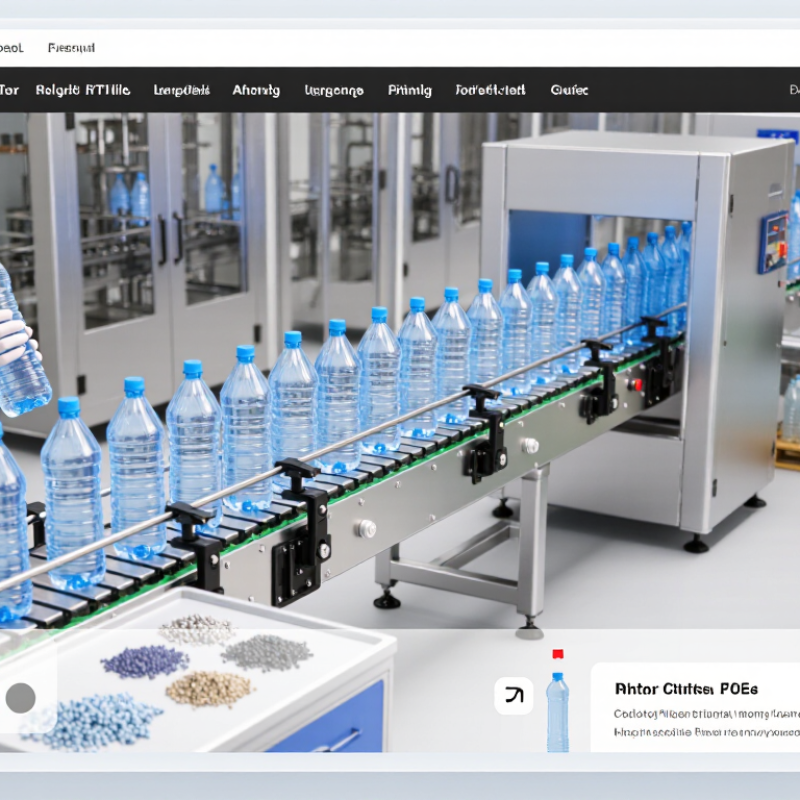
Choosing a plastic bottle manufacturer starts with the material and process map, not a polished catalog. PET offers clarity, strong stiffness, and reliable gas performance for water, beverages, and many personal-care products. Preforms are heated, stretched, and formed through injection stretch blow molding, often called ISBM. Stretching improves orientation, but uneven heating can create thin shoulders or weak base areas.
HDPE suits opaque containers that need chemical resistance and practical impact strength. Extrusion blow molding forms a hot tube, then air pushes it against the mold. PP handles higher filling temperatures better than many common packaging plastics. It can work well for lightweight jars, closures, and selected hot-fill applications. However, stiffness, clarity, and sealing performance depend heavily on grade and design. A neat material map can still mislead.
Tips: Request resin specifications, wall-thickness maps, mold trial records, and leak-test data. Ask whether recycled content changes color, odor, or processing stability. Test the finished bottle, not only the resin. Small neck changes matter. Reliable manufacturers should provide batch traceability, dimensional checks, drop testing, and torque results. They should also explain cooling time, cycle limits, and mold maintenance. In practice, one design rarely fits every filling line. I have seen attractive samples fail after transport vibration, because the base was too light. That detail deserves attention before production approval.
Compliance Benchmark: 25% rPET in EU Bottles by 2025; 30% by 2030
China’s leading plastic bottle manufacturers are adapting quickly to Europe’s recycled-content requirements. From 2025, PET beverage bottles placed on the EU market must contain at least 25% recycled plastic. By 2030, the target rises to 30% for plastic beverage bottles.
Compliance begins with material control. Experienced factories should separate food-grade rPET, record supplier batches, and verify recycled content through laboratory testing. Clear chain-of-custody documents help buyers confirm where the material came from. Production teams also need to test bottle strength, color stability, odor, and chemical migration. A bottle may meet the percentage target but still fail during filling or transport.
Quality is not only about the resin.
Manufacturers with strong technical systems usually provide trial samples, production records, and independent audit access. They should also explain how recycled flakes become approved pellets and preforms. This process needs careful drying, filtration, and temperature control. Small errors can create weak necks, haze, or uneven walls. Those defects increase waste and reduce the environmental value of rPET.
A perfect circular system does not exist yet. Recycled plastic can vary between batches, and some suppliers may rely too heavily on written claims. Buyers should question unsupported percentages and request current test evidence. Regional recycling capacity, food-contact approvals, and packaging design all affect real compliance. Lightweight bottles, washable labels, and compatible closures can support better recovery outcomes, but they require practical testing rather than optimistic specifications.